

The Difference Between Medicare, Medicaid, and Private Insurance
Health insurance can be confusing.
Many people hear the terms Medicare, Medicaid, and private insurance and assume they're all the same. They're not.
Understanding the difference can help you choose the right coverage, know what benefits you may qualify for, and avoid costly surprises.
Let's break it down.
What Is Medicare?
Medicare is a federal health insurance program.
It is primarily for:
👵 People age 65 and older
♿ Some younger people with certain disabilities
🩺 People with End-Stage Renal Disease (ESRD) or ALS who qualify
Medicare helps pay for things like:
Doctor visits
Hospital stays
Preventive care
Medical equipment
Prescription medications (through certain plans)
Even with Medicare, you may still have deductibles, copays, or coinsurance.
What Is Medicaid?
Medicaid is a government health insurance program for people with limited income and resources.
Unlike Medicare, Medicaid is run by both the federal government and each individual state, so benefits can vary depending on where you live.
Medicaid may cover:
Doctor visits
Hospital care
Prescription medications
Long-term care
Home health services
Dental and vision benefits in many states
Some people qualify for both Medicare and Medicaid. These individuals are often called "dual eligible."
What Is Private Insurance?
Private insurance is health coverage offered by private insurance companies.
You may get private insurance:
💼 Through your employer
🛒 By purchasing your own plan
❤️ Through a spouse's employer
📋 Through the Health Insurance Marketplace
Private insurance plans can vary widely.
Each plan has its own:
Monthly premium
Deductible
Copays
Provider network
Covered services
That's why it's important to review your benefits every year.
A Quick Comparison
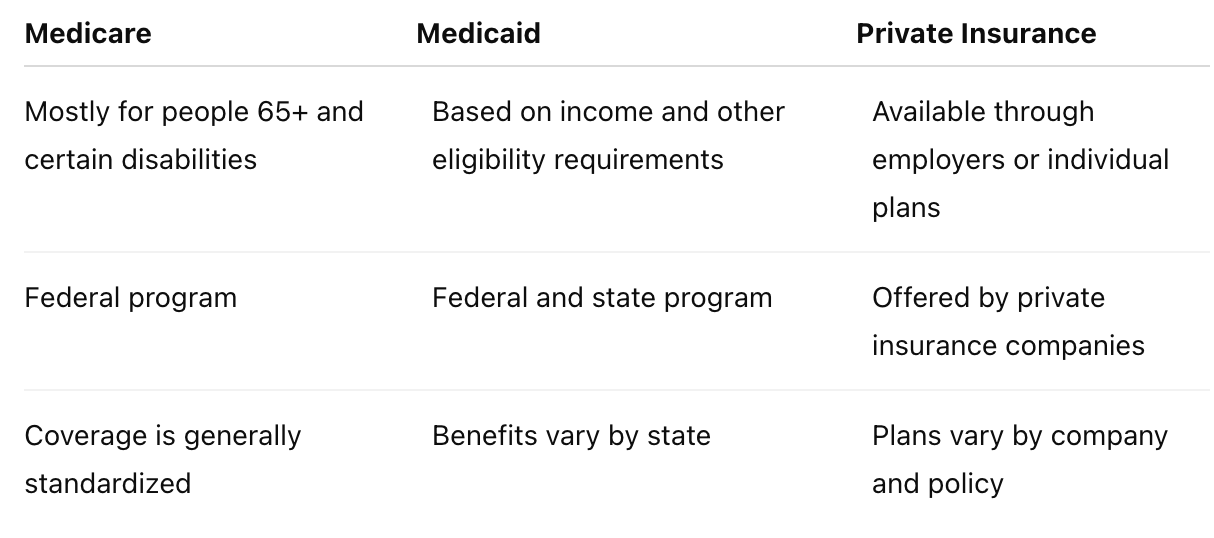
Insurance comparison chart.
Can You Have More Than One?
Yes!
Some people have:
Medicare and a Medicare Supplement (Medigap) plan
Medicare and a Medicare Advantage plan
Medicare and Medicaid
Private insurance along with Medicare
Having more than one type of coverage can help reduce out-of-pocket costs, but understanding which insurance pays first can be complicated.
Why This Matters
Knowing what type of insurance you have helps you:
Understand what services are covered
Avoid unexpected medical bills
Know which doctors are in-network
Get the referrals or authorizations you may need
Make informed decisions about your healthcare
If you're ever unsure about your coverage, don't guess. Ask questions before appointments, tests, or procedures.
You Don't Have to Figure It Out Alone
Insurance can feel overwhelming, especially when you're already dealing with health concerns.
At Aria The Advocate, I help patients understand their coverage, navigate referrals, coordinate care, and feel more confident when making healthcare decisions.
The more you understand your insurance, the easier it becomes to focus on what matters most—your health.
